Thursday, February 24, 2011

2010 Europe Trip: Ghent - An Art Side Trip

Ghent is a city in Belgium and about a 30 minute train ride from Bruges. I originally thought I'd take a day trip to Brussels and Ghent but I only had one day. After considering the pros and cons I decided to go to Ghent.

I'd read about both Ghent and Bruges when I was in my early 20s in Conde Nast's Traveler which had recently been relaunched. The article was very short, a blurb really, comparing Bruges with Ghent. It said that Ghent is often overlooked in favor of Bruges. This might be true for many travelers but the primary reason I chose Ghent over Brussels was so I could see some key pieces of art.

When I arrived at the train station I found the tram to downtown after asking some locals. Ghent is a modern city with an amazing city center of medieval buildings. As we drew closer to downtown, however, I realized the city was in the middle of a massive restoration project. All of the streets and sidewalks of the downtown area were being torn up and redone. It was a mess.

A view of the downtown construction.

It quickly became clear that I wasn't going to do much walking around. If that's all I'd come for I would have been disappointed but I came to see the art so all was not lost.

I started at the Sint-Baafs Cathedral (you can see it in the above picture looking down the street) to see the main event, The Ghent Altarpiece or the Adoration of the Mystic Lamb by the van Eyck brothers (started by Hubert, who died while working on it, and finished by his brother Jan). This polyptych was completed in 1432. The altarpiece is 11 x 15 feet. Yes, that means it takes up an entire wall. I knew the painting was undergoing a major restoration but they said I could still see it and watch the restorers at work.

My postcard of the front of the altarpiece with the side panels open

The restorers were housed behind a glass wall with various tables and computers, lights, cameras, and other instruments. They were working on Adam and the singing angels in the upper left corner, and the two panels of knights in the lower left corner. The rest of the main altarpiece was still on the wall. Restorers were making notes and taking pictures of it. The two panels of knights were right in front of the glass wall so I could get a good look at them. I stood there for over an hour, watching and looking. People came and went, including crowds of tour groups. Most were there for two minutes or less. There was one couple who stayed for perhaps 15 minutes before leaving. When I was taking my class of Lower Medieval to High Renaissance Art, I was completely amazed by this altarpiece the first time my teacher showed us the slide. I vowed that I would someday see it in person. At the time it seemed like such an impossible dream. Now that I was there I was really going to look at it.

I noticed the archangel Gabriel was leaned up against the wall behind the closest restorer who was sitting at a desk with a lot of camera and computer equipment. I couldn't really see Gabriel with all the stuff in the way, plus he had a green strap hanging over his precious face. Though I can't draw faces at all I decided to stretch myself a little and draw him.

Gabriel is part of the back side panels which close over the main part of the altarpiece. He's in one panel with Mary in the other next to him in a depiction of the Annunciation.

A photo of the back of my postcard showing the back side panels. You can see Gabriel there on the upper right side and Mary opposite him on the left.

You've seen this sketch before but I had to show in context here.

Another photo of my postcard. You can see what I was trying to attempt in my sketch.

Gabriel was a tough, tough draw. Because he was behind the restorer leaned up against the wall on the floor, I had to stand on my tip toes to get a decent look at him. The restorer noticed I was trying to draw him and was kind enough to turn on a light near him so I could see better. Also, I was really intimidated because this was a treasured masterpiece by the van Eyck brothers with all its glorious attention to minute details. Still, I was very happy I made the attempt. One of the many cool things I liked about Gabriel was his traditional rainbow wings look like the cross section of a watermelon with the same kind of texture.

I reluctantly left the altarpiece and strolled around the cathedral. There's a Rubens there as well though I can't remember which one. I didn't take any pictures of the inside of the cathedral. I went outside and wandered around the main part of the historic city center as much as I could but the torn up streets and heavy equipment motoring around made me think twice so I made my way back to the tram.

Uneven, torn up streets.

Sint-Niklaaskerk is right across the street from Sint-Baafs.

The street restoration project should be finished sometime next year, if memory serves me correctly. When they're done I'm sure the city center will be gorgeous.

I took the tram back to the train station then inquired about where I could find the Citadelpark, a lovely park where there are several museums, among other things. It was very close to the train station, maybe 2-3 blocks away. I was on my way to the Museum voor Schone Kunsten to specifically to see two paintings by my favorite painter, Hieronymous Bosch. As an aside, I wrote an essay a couple of years ago entitled The Role of Extreme Violence in Art where I talk about Bosch, among others, and why I love him so much.

A very beautiful park. No one was around. I think I saw two people on my way to the museum.

Sun, trees. I can't get enough of these kinds of photos.

The museum was larger than I expected and again, no one was around. They had a special exhibit going on but I elected not to see it. The art I was looking for was in the second room I walked into. There they were: Christ Carrying The Cross and Saint Jerome At Prayer.

My postcard of Christ Carrying The Cross, the fifth Bosch I've seen so far.

I LOVE this painting and spent a long time looking at it. There was no one in that part of the museum, not even the security guards. Sadly, the painting was in need of restoration. I decided to try drawing another face and chose the grotesque face in the lower right corner of the painting. Since his features were so exaggerated I thought it might be easier. It wasn't. I particularly had a difficult time with his nose, getting it in proportion to his face and in the correct shape.

On another wall in the same room was Saint Jerome. I was really tired by then and decided to go the easy route and just draw his robe. I've gotten much more comfortable drawing draped fabric.

You can see the robe I drew draped over the tree log on the right.
As the post-it tag notes, this is my sixth Bosch.

I walked through the rest of the museum and only saw three other people. The museum is a kind of a maze with different levels and sub-levels. It seemed like it was organized in a half-circle shape. I kept getting lost and couldn't figure out which direction I was moving in. This proved to be fun because I kept walking into rooms with interesting art, particularly when I got to the 20th Century section.

I eventually found my way out and walked back to the train station where I caught the next train back to Bruges. My back, shoulders, neck, arms and hands were hurting, sketching is a painful activity for me. It was late afternoon in Bruges and folks were out in force in all the outdoor cafes. The walk back was good for me and my feet had finally gotten used to the cobblestones.

Monday, February 21, 2011

My Dog Was A Good Girl

Me and the Dog. She never did like the camera.

Last Tuesday I had to put my dog down. As I mentioned in a previous blog post she had lymphoma. I refused to go the chemotherapy route and so the vet suggested we put her on a steroid which was supposed to shrink the tumors. It did but it only lasted a month. He said it would last two months, that I would get two more good months with her, but that didn't happen.

The main concern for me was waiting too long. What do I mean by that? It's when you realize the animal is suffering and it's time to end its life but you can't bear the thought of making that decision so you delay until you're forced into it or the animal dies on its own. I've waited too long before with pets and I was determined not to make the same mistake.

She was doing all right until she stopped eating on Saturday night. She'd lost a ton of weight already, her spine and ribs were visible, so when she stopped eating even her favorite foods I knew it wouldn't be long. She ate a treat here and there but that was it. By Sunday night when I took her out for her nightly walk she was having trouble walking up the hill. By Monday morning her legs were starting to give out and she was stumbling.

My Dad always said when the animal can't get up and walk anymore it's the end of the line.

She clearly wasn't feeling well on Monday and I was scheduled to go to the film festival that night for a screening and sort of anti-Valentine's Day party. I went to the screening and then came home, skipping the party. She was glad to see me. That night I picked her up and put her on the bed with me. She used to sleep with me all the time but I kicked her off the bed years ago because she sheds like crazy. I was up most of the night with her, talking to her and petting her. We both dozed here and there but kept waking up. She was panting a lot and wheezing. Towards the dawn I took her outside and she could barely walk. We went back to bed and slept a bit longer.

When I finally got up I asked if she wanted to get off the bed because I'd have to help her jump down. She just gave me this look like, "Hey, I'm up here now and I'm not leavin'!" I managed to coax her off the bed and we went outside again. It wasn't good. And I knew it was time.

When you've made a decision like this you're always second guessing yourself. Even though all the factors line up and you know without a doubt that this was the only course of action you could have taken you still can't get over that terrible truth which is:

I killed my dog. Sure it was the most humane decision but...I still did it.

So I spent a lot of time that morning justifying this decision, and I still spend time justifying it. It's a normal part of the grieving process. I go over the reasons again and again. They are:
  • She stopped eating and I didn't want her to go another day without eating. Christ, I didn't want her to fucking starve to death or even be on her way to starving to death.
  • In another half day, she wouldn't be able to walk anymore and I wouldn't be able to pick her up. She wouldn't be able to go to the bathroom on her own. The thought of her sitting in her own shit and piss and feeling awful about it because she always feels terrible when she has an accident, well, I just didn't want to put her through that.
  • I was so afraid that she would die alone. I didn't want to come home and find that she'd died by herself without anybody (me) around.
  • Pain. My dog was clearly in pain though she was being a good sport about it.
I sat in the bathroom with her on that Monday morning and did my first round of crying. She was sitting there because she couldn't really get up anymore. Then I got myself under control and called my Dad. My first thought was I'd take her to my vet and have him do it but realized I wouldn't be able to get her back into the car. Instead, I asked my Dad if I could bring her to his vet. He and my brother were both available. He agreed this was a good idea.

When I got her into the car, she was so weak she couldn't climb into the back and had to sit on the floor of the backseat. She's never done that. I had to help her out of the car. When my Dad saw her he suggested we try to take her to the vet right away if they were available. My Dad and brother had already dug her grave in the backyard.

The vet and vet staff were great and overall I have to say this was a really good experience. We put her on the dog bed and the vet explained how everything would work. She told us they would give her a sedative and then a full syringe of barbiturates. She warned me that it would be very fast, 2-3 minutes tops. I sat on the floor next to her head, my brother sat on the other side, and my Dad sat on the bench. The vet techs came in and inserted a needle into her arm then left. The vet came in and asked if I we wanted more time to say goodbye. My brother and I said no.

Through it all my dog was very calm. She seemed only a little worried and not at all agitated or scared. She wasn't even panting and she always pants when she's at the vet. The vet came back with two syringes. The sedative and what looked a full 10ccs of pink liquid. My brother told me later that was a huge amount, maybe enough to kill a human being. The vet injected the sedative and I leaned over my dog, taking her head in my hands.

She loved getting her cheeks and the side of her head stroked and would always lean into my hands and close her eyes whenever I did this. She didn't do that this time. Instead she stared into my eyes. My hair fell over both of us and formed a kind of tent, and then it was just me and her. I kept murmuring over and over that she was a good dog, kept stroking her head. She kept blinking but her blinking had already started to slow down. The vet said she was going to inject the pink liquid and I stared into her eyes and focused on her like I never focused on anyone else before. She gave a gasp and then another one, glanced at the syringe, then looked back at me. I kept stroking her head and murmuring, just the two of us underneath my hair, staring at each other. She blinked maybe two or three more times and her breathing became soft and gentle. And then she was gone and her head completely relaxed in my hands. I raised my head up and placed my hand on her side to check her breathing as the vet listened with her stethoscope.

The entire procedure from the time the vet injected the sedative to the time her head relaxed in my hands took less than two minutes.

The vet left, so did my Dad and brother, and I had a few minutes alone with her. I removed her leash and collar and kept petting and talking to her. I've heard that when the body dies, it takes a bit longer for the brain cells to shut down. If there was any chance that she could still hear and/or smell me I wanted her to know I was still there.

We took her home and put her into the ground. We let my parents' dog look at and smell her then we buried her.

The entire experience was a really good one as I mentioned before. I was there with her, so were my Dad and brother. And it was mercifully fast. I hope my own death is that good.

***
I'm still grieving, obviously. I still haven't cleaned up her toys or her dog bowls. I'll get around to doing that sometime. I'm not worried about it.

I miss her terribly.

I thought long and hard about whether to write this post but in the end I decided that putting this experience out there for others to read was a good idea. The mixed feelings about this experience is inevitable and it's something that many pet owners will have to go through at some point.

While I have guilty feelings over putting my dog down, I'm absolutely certain that I didn't wait too long this time. It's a small comfort.

Thanks for reading.

Friday, February 18, 2011

Writing Life: Reading to "Learn"

As I've said before, reading all the time is essential for writers. My problem is I read very slowly and I wasn't getting much out of it. I was enjoying the stories but not really learning anything.

Recently, I came up with a way to read and "learn" at the same time. This grew out of my penchant for taking notes in the margins while reading difficult books. I started reading Paradise Lost by John Milton this way. Since it was taking me so long to read, I started summarizing the story in the margins so it would be easy to do a quick review if necessary. I started underlining parts that I liked and putting boxes around unknown words. Soon, however, I was making commentary as I went along such as keeping track of Milton's names for Satan, musing about the story questions, adding cuneiform numbers (for fun), and giving my completely unwarranted opinions about the action such as "Damn, Book X is long," "I'm sure God sounds just like John Cleese," and "Okay, Satan has been out of this story for far too long a time."

Since I'm writing a historical mystery, I need to read historical mystery novels so I decided to try a similar idea for my current book The Name of the Rose by Umberto Ecco, a book about a series of murders that place in a monastery in 1327 in Northern Italy. I read this book years ago when I was in my late teens. I remember enjoying it and thinking the plot was very well done so I was mostly interesting in mapping it out so I could learn to create better plots. Mapping out the plot is where you do a sort of summary of each scene (or chapter or whatever) so you can look at the story as a whole. The classic way to do this is with 3x5 index cards but I'm going to do my map in Scrivener. I'm primarily focused on the plot of the book but I'm also looking out for other useful things to note. Here's a summary of the process so far:
  • On the first page I created a place to note the two main characters' tags. A tag is something that makes the character unique such as their age, their background, what they look like, their personality, likes and dislikes, etc. For this book, I'm keeping track of tags for Adso (the narrator and young novice) and William (the monk and former inquisitor charged with solving the mystery). William (of Baskerville, no less) is modeled after Sherlock Holmes and Adso sort of functions as his Watson.
  • Next, I make notes in the margins summarizing the action. Time is very important in this story since it takes place over seven days so I pay close attention to how time unfolds. Umberto does a great job of building up the tension in several different ways which I make note of.
  • I look out for other instructive and wonderful things to note. This story has a lot of early church history. In fact, Umberto goes into deeply into this history, probably more than is necessary, and seamlessly incorporates it into the story and makes it personal to the characters.
  • Also, the story world is detailed and obviously well researched. Umberto really only has to concentrate his efforts on the monastery itself. The heart of the story takes place in the Library, a mysterious place full of dangers and secrets. This Library is a literally a maze: if you go in, you may not find your way out again.
These are the things I'm concentrating on for this book. For another book I might concentrate on the characters if they're particularly vivid or the language or settings. When I'm done with my notes, I'll map out the plot in Scrivener and will likely do an write-up of the other aspects of the book I liked and why I think they worked so well.

This is a time consuming process but very worthwhile. I wrote a story not too long ago based on characters that already exist and I felt it was important to re-read the source material. Well, that process took almost two months and I took extensive notes. It was a very useful exercise because I learned that it was necessary to invest that kind of research into my own characters.

I plan to go back to certain books to figure out why certain parts work so well. For example, The Curious Incident of the Dog in the Night-time by Mark Haddon has a GREAT ending. I'm going to try to figure out what makes it so moving and wonderful. Also, the short story Honey Pie by Haruki Murakami is one of the sweetest love stories I've ever read but it's not overly sentimental or cliched, and I want to figure out how he did it.

I do enjoy this process. When I was younger the thought of writing in my books made me shudder and I still won't write in hardcover books, but I have to say going to the shelf and opening up that marked copy of Paradise Lost gives me a great deal of pleasure.

Saturday, February 12, 2011

Victims Hanging From Unfriendly Walls

Within those years, like tiny buttons marching up a woman's bare back, we carried on. Our relationship was a compartmentalized ritual, a broken shell of a box decorated for practical consumption only.

You always hated those barren, naked nights. Too cold, too raw, you said. The blankets were too slick, the bedroom too distant. You never liked sushi anyway.

We marched past expensive restaurants, never dreaming, only eating our way through and around. Everything to be consumed in one fell swoop before moving on to the next. We were like army ants decimating our tiny landscapes, marching off to war, and taking all prisoners. We struggled to hang the victims of our battles from unfriendly walls but the corpses wouldn't stay put. Instead, they floated off to the ether, calm and at peace.

You always wanted for more. And more. Insatiable lust is easy and expected, it's everything else that's difficult to manage.

You always seemed to be a wide open mouth of deadly proportions with teeth of steel and glass. You eat everything out and spit it up. You starve, you hunger. You are never satisfied. You are the monster disco dancing, longing for that white polyester suit.

We craved around everything imaginable, sucking and tasting our way through polite, educated society. We defined ourselves by our consumption. We threw it all way after using it up, or even without the using. Sometimes we just had things and then let them go. Sometimes we were loving about it but most of the time there were animals involved just to keep things interesting.

You always seemed to be a mashed up conundrum of insecurities, a screwed up scramble of leftover emotions, and burned up good intentions. I know your secrets, all of them, like how you've taken to eating the very earth, chomping at the ground in desperation. I know you have indigestion problems. I know you drink like a fish. I know all living creatures flee before you in panic.

Wednesday, February 09, 2011

Movie Musings: The Films of Luis Buñuel - Un Chien Andalou and L'Age d'Or

***This post contains movie spoilers**

Luis Buñuel directed our two best known surrealist films: Un Chien Andalou and L'Age d'Or. Salvador Dalí and Buñuel co-wrote both screenplays. They became close friends, along with poet/playwright Federico García Lorca, while studying at the University of Madrid. These two films form what is thought of as Buñuel's First French Period. Part of the reason I choose him for this film survey is because he's made films in many different countries, in different languages, and I thought it would be fascinating to see how the director evolved and matured over time.

Un Chien Andalou (1929) - This is a silent film and it clocks in at 16 minutes though they are 16 crazy minutes. There's no plot. Mostly, it's a series of bizarre surrealist and disturbing images involving a man and a woman. The primary theme in the film seems to be sex and death. This film boasts the most infamous and famous opening sequence ever filmed: a man slitting open a woman's eyeball with the straight razor while she sits impassively. Other famous scenes include a man fondling a woman's naked breasts and buttocks, ants crawling out of a hole in the man's hand (you just know that was DalĂ­'s contribution), the man using ropes to pull on two pianos with rotting donkeys and bewildered priests in tow (one of whom is played by DalĂ­ himself).

I liked the film. Because there's no real plot, you're forced to focus on the images themselves which gives it a very different feeling from most films. This isn't film as the storyteller, this is the filmmaker's attempt to speak to the viewer's subconscious in a visceral, uncomfortable way.

The DVD I rented has commentary but I really couldn't make heads or tails as to what the guy was talking about. He wasn't really talking about the film or how it was made though he did repeat several times that the film was about sex and death. I was craving some additional information about how they came up with some of the ideas for it but there was no such information. Buñuel stated the film isn't about anything at all and it's not supposed to make a statement, religious, political, or otherwise.

L'Age d'Or (1930) - This film clocks in at one hour. It's very obvious Buñuel's intent when making this film was to offend as many people as possible especially the Roman Catholic Church and bourgeois society. He also manages to offend families, conductors, respectable folks, and parents.

The film starts as a documentary about scorpions before moving onto a short sequence about some poor, wounded soldiers attempting to hold back the enemy (who turn out to be a bunch of church leaders) but are unable to do so. The film then switches to a group of respectable folks gathering at a civic ceremony. The solemnity of this ceremony is interrupted by the ecstatic cries of a lusty couple who are rolling around in the mud. They are soon separated by the crowd and for most of the film they attempt to get back together but are thwarted again and again. (Heh, sounds like a reoccurring dream I have every once in a while.) Most of the film takes place at a fancy party where our couple desperately tries to consummate their passion. The last scene shows a group of debauched men leaving a certain castle after indulging in a murderous orgy for 120 days (based on The 120 Days of Sodom by the Marquis de Sade). The first nobleman who emerges strongly resembles Christ.

I thought Buñuel's use of sound in the film was ingenious. He was very selective about it. From the sound of the wind blowing out of a mirror which shows the sky and clouds instead of a reflection (one of the most famous sequences in the film), to the crunch, crunch of a man's shoes on gravel lining a garden path, to a pet cow's rather persistent cow bell ringing during a dinner party, the sounds were interesting and surprising.

I really liked this movie. I've had a few days to digest this film and it just seems to get better and better. Though the ending is disturbing (esp if you know anything about de Sade's story), the rest of the film has plenty of black humor. One of my favorite sequences is when the man, apparently rejected by the woman, goes to her bedroom and in his rage throws a bunch of stuff out her window including a burning bush, an archbishop, a plow, a giraffe (but not the cow), and some goose down from her pillows. I also love the part where the man gets a phone call and leaves the woman. The woman expresses her sexual frustration by fellating the toes of a religious statue she's sitting next to in the garden. This scene could be described as pornographic.

The film caused a riot in Paris, was banned for almost 50 years, and there was a rumor that the aristocrat who commissioned it might be excommunicated by the pope. This is the kind of film that certain folks today would call an affront to family values and point to it as a breakdown of society's morals. Certainly people in 1930 thought this was true. Some people say the film's message is that sexual repression leads to violence. It's as good an interpretation as any.

Tuesday, February 08, 2011

Stuff I've Been Thinking About Lately - A List

  • Does the fact that I don't have a regular job, a family, and a significant other make me a loser or does it mean that I have more freedom than even I thought possible?
  • In little over a week's time I saw five plays/musicals: Harper Regan (a sort of female version of the Odyssey), Clue (based on the board game/movie), Next to Normal (a harrowing but amazing Pulitzer prize winning Broadway musical), Spalding Gray: Stories Left to Tell (excerpts from his monologues, notebooks, letters, and journal), and East 14th: True Tales of a Reluctant Player (a fantastic monologue by a guy who grew up in Oakland whose father was a pimp).
  • Just how many films can I watch at the SF IndieFest (Independent Film Festival) anyway?
  • One of my horoscopes for the beginning of the year said I wouldn't have to worry about encountering fire demons, wart-ridden vampires, two-headed dogs, moaning ghosts, wayward werewolves, or extraterrestrial robots this year. Well, he's blasted wrong about the two-headed dogs already and may be wrong about the extraterrestrial robots.
  • I'm not spending enough time with my novel and my characters are getting pissed off. Hopefully they won't mutiny or stage a protest.
  • I'm in love with my calendar.
  • The most important and most difficult thing is forgiving yourself.
  • Today I fell madly, deeply in love with the following image:
Glass of Water and Coffeepot (c. 1761) by Jean-Baptiste-Siméon Chardin
  • There's a strange tension going on lately with the good and bad. For example, my dog is dying and has diarrhea. One thing I've been having to do is clean her up after each walk. Yesterday, I was talking to her about how unpleasant it is to have to keep wiping her ass but I realized that the day when I stop having to do so is the day she's gone forever. I bowed my head and wept. Just me and dog, alone in the bathroom with the water running. A bad moment fraught with so much good.
  • I'm tired and worn out but so happy lately. So many stressful things happening and yet it seems the world has chosen this time of all times to reveal itself and its beauties: the soft warmth of the night and the delicate sweet sun in the daytime, great friends and great conversations, the overwhelming feeling that love is not only everything but it seems to go on forever, inexhaustible. Not necessarily romantic love but love that comes from seeing all the wonders that reside within, all the great gifts. I suppose it's a fitting feeling with Valentine's Day around the corner even if I can't expect a box of chocolates this year.
I hope you are all doing very well. Thanks for reading.

Monday, February 07, 2011

City Life: Ocean Beach & Fire Dancers

My friend and I went for another walk on Ocean Beach last week. I won't bore you with the usual sunset pictures but we did see some fire dancers performing after the sunset.

Another sunset picture on Ocean Beach. I never get tired of it but
I do seem to be taking a lot of these sunset photos lately.


The fire dancers were on the walkway. There was a nice band playing with them. They'd attracted quite the crowd.

This woman was using a sort of hula hoop that had been lit in several places. Very impressive.

This was the first guy we saw. I love his expression of concentration.

I had no idea fire dancers performed here. It gave the evening a primitive feeling. After all, what could be more basic than fire on a chilly night?

Friday, February 04, 2011

Taking Pictures

A couple of people asked me how I take pictures and my response was "point and shoot." A friend suggested I write a blog post about my picture taking process. I didn't see the point of such a post because I didn't think there was a process. Stop, point, and shoot seemed to be it. After a while, however, I realized there is a process I follow if there's enough time. For what it's worth here is how I approach picture-taking.

First, the camera. I take my pictures with a Panasonic DMC-TZ4 with 10x optimal zoom and Leica lens (maximum number of megapixels = 8). This is a great point and shoot camera. Of course, I paid more for it but it's been wonderful and responsible for almost all the photographs I've posted here in the last 2-3 years. I chose this camera primarily for its 10x zoom without giving much thought to anything else, including the brand name. I have a couple of Canon Rebel 35mm film cameras but I didn't feel I had to stick to a Canon camera.

Taken with my Motorola Droid phone, my "other" camera.

CAMERA MODE

I start out by getting into "camera mode." This means taking a look around. I look all around me, up close and far away. I usually look up at the sky first (or ceiling and upper walls) then far out in front of me. Then I'll look at the light and see how it changes as I move around. I try to home in on shape next and usually this means building architecture and streets if I'm outside. Sometimes it means looking at trees, plants, clouds, hills, the waves if I'm at the ocean. Then I'll look at people walking by.

While indoors I'll do the same thing but adjust for the confined space. If you're inside a building be sure to look up and all around you. You're looking for interesting architectural details, how the light filters through the windows and doors, interesting details that might make up a good close up shot, etc. If you're in an intimate space, such as a home, focus on personal items, wall color and pattern and how the light is coming in. Even if you're taking pictures of people, you still want to get a good sense of the "feel" of the environment and the light so you can use the best background.

Walking around is very important if you have time. You might see a picture you want to take but if you're walking around you might find your subject looks better from a different angle because of the way the light is or because it simply looks more interesting from a different viewpoint. And a different angle might mean shooting from the floor or high above.

If you have the time I suggest taking a few test shots to see how they come out and what the light looks like. You might find that using a flash would be better or you might want to try out a different setting on your camera. I also suggest trying out the zoom to see if that makes for a better picture. It doesn't matter if the picture isn't completely in focus, this is just a test run.

Getting into "camera mode" at a church in Bruges. I knew this photo wouldn't be particularly compelling but I took the shot and several others like it to see how the architecture of the space and light showed up in the picture.

Another "camera mode" picture in the same church. I thought this picture of the church organ might turn out well because of the light in the windows and the angle but when I took the first shot, I didn't like it.

POINT, MOVE, ZOOM, LIGHT, SHOOT

Many times I'm already in camera mode so all I have to do is keep looking until something catches my eye. I'll pull out my camera or turn it on and then set up the shot. I try not to use any presets on my camera unless it's Nighttime or Scenery. I don't use Sunset mode because it makes everything way too orange. I try to take at least 3-4 shots of my subject unless I'm moving pretty fast (as when I went hiking in the Narrows at Zion). When I'm moving quickly I'll just point and shoot (preferably two times) and move on, trusting that something will come out. Many times the best shots are the spontaneous ones.

Start of the snow in Budapest. An example of shooting quickly and
using a little zoom to make the picture better

Never underestimate the usefulness of your zoom. While I have 10x zoom on my camera, I still think any zoom is worth experimenting with. Sometimes all you need to do is pull in a little tighter. I shot the picture above through the window of the tour bus as we were driving around a corner. Look out the window, focus, point, shoot, glance at photo, zoom in tighter, shoot again. I was hoping against hope I would capture the snow falling. In the first one (below) you can see the reflection of bus lights in the window. The one above is the second one. You can see reflections from the bus window in the picture above but they aren't that noticeable. I choose to take this picture here because you can't see as many buildings in the background. Had I taken the shot a few seconds later, you'd see them and I don't think I would have liked the picture as much.

Here's the first picture with the bus lights, the window corner, and the sidewalk.

Paying attention to light and color in less obvious places can yield some good shots. Light and color are front and center while walking on the beach at sunset but paying attention elsewhere can be interesting too.

The underside of a pier in Santa Cruz, California. I wouldn't call this one of my best shots but I like it for the color on the water and the shadowy supports. This shot and the other four like them were experiments in trying to capture light, shadow, and color.

Here's another shot. As I said, not one of my best but a worthwhile experiment.

Ferns at the National Conservatory in Washington, D.C. Had I taken the picture straight on I would have been shooting into the sun. I walked a few steps to the left and took this shot.

I took this shot in Nuremberg while walking along the top of the city wall. I took a lot of photos on this walk as research for my novel and had fun with the constant play of shadow and light.

ANGLES, FRAMING

I really like to play with angles: shooting from above, shooting from the ground, making the subject off center in the picture, and most important, leaning back and shooting straight up. I don't always use these shots but they really help me loosen up and take good pictures. One of the best photos I've ever taken is one I took with my 35mm film Canon Rebel camera at Bryce Canyon. One shot. I leaned back as far as I could and shot a picture of a redwood in the middle of the narrow red canyon looking up at the top of the tree and the blue sky. The picture is framed at my parents' house. I should have a digital version of it made so I can post it here.

The Brooklyn Bridge in NYC. I like this picture just fine but everyone takes this picture.

The Brooklyn Bridge again. I was fascinated by the interplay of cables and overcast sky. After leaning over and tilting my head I decided on this shot. I like it much better.

I'm also interested in reflections and framing shots a little differently. I tend to think in terms of architecture when trying to come up with a different way to frame a picture. Is there a part of a building or piece of furniture or trees that will frame and bring out your subject better?

I took this picture at the MOMA in NYC. I was eating on the cafe balcony and noticed the reflection of the buildings on the outside wall of the museum. I don't recall if I ever showed this picture to anyone but I like it a lot.

I took this shot at the National Cathedral in Washington, D.C. I took a couple of pictures without the window bars but really like how this picture and the other one like it turned out. This is a GREAT wallpaper on my computer.

A hallway at the Abby in Melk, Austria. I find that shooting anything that is a tunnel or looks like a tunnel usually yields interesting results. If you're shooting an actual tunnel, I've found that going a little ways inside gets the best pictures especially if the tunnel is dark and the other end is light. If you're still not getting a good shot then try moving around some more.

Another example of my experiment with framing. This is my old friend Pierre the Penguin inside his nest box. I'm shooting through the small hole in the back of the box. It's blurry but it was an experiment.

You've all seen this picture in the sidebar. Pierre climbed out of his nest box a couple of minutes later. He noticed I was still fussing with my camera and turned to look directly at me. And yes he is looking at me. Penguins don't have binocular vision like we do so when they want to take a good look at you they turn their head and look at you with one eye.

LIMITATIONS, SELF-IMPOSED AND OTHERWISE

I am well aware of my limitations while taking photos. For example, I don't really understand the manual controls or even the presets on my camera. Instead, I have to rely on doing what I can to get the camera to duplicate what I see. One of the major things I struggle with is camera shake where you can't hold the camera still enough and your pictures turn out blurry. Obviously, this is a common problem when you're moving quickly. It's great that my camera is small and fairly light but that also means I can't hold it perfectly still either. A larger, heavier camera helps compensate for this problem but it also means your camera weighs a ton while lugging it around. Many cameras have a feature that can compensate for this problem some of the time. Also, I could use a tripod but to be honest the times I have the most problem with camera shake is when I'm trying to take a picture at an unusual angle such as when I'm leaning straight back. Taking a deep breath and holding it while planting my feet just before taking the shot helps a lot.

I don't really like to take pictures of people posing in front of something, like a landmark. I suppose the reason why is everyone takes pictures like that. When I took my two trips to Europe I spent a good deal of time taking self-portraits. Inevitably, someone in my group or a passerby would offer to take a picture of me standing in front of something. I can think of only two of these kinds of pictures of me that I actually like.

A photo of me standing in front of a canal taken by a nice man while I was in Bruges.

Obviously this is a cheesy self-portrait but I like it anyway. I'd been looking at Flemish Primitives in Bruges the previous day and was spending the day in Ghent. I'd just come from seeing the Ghent Altarpiece and I was on my way to see more Flemish Primitives at the Fine Arts Museum. I was in Northern Renaissance art heaven and I think you can see it in my expression.

KEEP SHOOTING

As with writing, the best advice I can give you is to keep shooting. You never know when you'll come up with something really cool. The easiest way to do this is to take your camera with you and use it all the time. It's the only way to get better. Start a blog of your pictures. Why not? I think I've become a much better photographer since I started posting pictures on this blog.

This is a picture of me reflected in a sign on the fountain in Justin Hermann Plaza in the Financial District here in San Francisco. I was hoping to get some interesting shots using the reflection but I was having difficult getting anything that looked right.

Then I got this shot and it was only one shot. The rest of the pictures look like the one above. Somehow I got the camera to focus on me instead of the signage and my eye came into perfect focus. Plus, I love that you can only see part of my face. This picture looks good in color but I think it looks even better in black and white.

Even if you don't take a camera with you all the time it would still be worthwhile to find interesting pictures to take with your phone camera. You never know when you might get something good and it's very good practice.

In terms of alterations I only alter my photos when I want to lighten them up a little if a photo is too dark or if the photo is a little out of focus I might try to sharpen it. I don't change the color and I never crop my photos. I don't do anything else to my photos unless I'm doing obvious alterations like I've done with my self-portraits. Such as:

Let me know if you have other picture taking suggestions or ideas. I'd love to hear your tips and tricks.

Wednesday, February 02, 2011

City Life: Railroad Tracks Over the San Francisco Bay

I was visiting Pier 24 Photography yesterday afternoon taking in photographs from the Collection of Randi and Bob Fisher.

When I arrived at the front door of the exhibit hall, I noticed with amazement that there were old railroad tracks alongside the pier. These tracks are obviously no longer in use. If you look straight down on the tracks you can see water from the Bay underneath. I took the above picture with my phone so you can't see the blue waters of the San Francisco Bay just beyond the tracks unfortunately but I did manage to tilt the shot so you can get a glimpse of the underside of the Bay Bridge.

Monday, January 31, 2011

City Life: Stairway to Heaven

Modified version of the staircase picture from my earlier post about the fog. It has a haunted look about it. Maybe even a Stairway to Heaven feel to it.

I'm stomping through the cold dark streets. It's okay to walk in middle of the street because it's after 3:00 am. The streets shine with orange fused illumination from the street lights. I stand in the middle of the street trying to get a picture of some kind but everything keeps coming out wrong.

It seems my desire to photograph what I see is getting more and more urgent but getting the camera to cooperate is something else. I wave at it, cajole the flash, hold onto it tightly (always wrapped around my wrist in case I drop it), and otherwise attempt to seduce my camera into seeing my vision or coming up with a better one.

Still, I'm grateful for this camera. When I bought it I was only focused on the 10x zoom and its luscious small size. I had no idea the lens was so much better than a regular point and shoot though I should have figured that out when I paid good money for it.

The dog just wants to keep going up the street, up that steep hill. I don't know why. There aren't many bushes for her to sniff around in. It's so late that the 36 bus has even stopped rattling by. I look up at a friend's window as we walk up the hill. She's asleep but it's still comforting knowing she's up there. Some people still have their Christmas lights on.

I like that Stairway to Heaven picture. The bright light at the stop of the stairs is one of the orange streetlights. It brings to mind Heaven's retractable staircase in Milton's Paradise Lost. I enjoyed modifying it. I was trying to keep more color in the photo but each time I tried to infuse some color the whole thing would go monochrome orange, green, or blue.

Someday I'll write a Stairway to Heaven story. It's one of the many religious motifs I haven't used yet.

Friday, January 28, 2011

My Dog Has Lymphoma


And she doesn't have long to live. Lymphoma means she has cancer in all her lymph nodes.

I had the option of chemotherapy but I can't put her through that. For one thing, it's crazy expensive and I'm still unemployed. More importantly, chemotherapy is terrible. It's very hard on the body. Even if she responds well to the chemo there complications that have to be dealt with because her immune system will be compromised and she'll be sick for a good part of the time. Ugh. No thank you.

Dogs who have lymphoma and who are not treated live for an average of 2 months after diagnosis. As a compromise, I chose the middle treatment of putting her on a steroid, Prednisone, which is supposed to shrink the tumors. It's only supposed to help for 60 days then the cancer comes back with a vengeance but it will be 60 good days where she isn't too sick. As of right now I have about six more good weeks with her. I'm estimating I'll have her for about three more months, maybe four.

Having grown up with pets I've been through these situations before. Also, since I volunteer with the penguins we bump up against these issues every now and then but volunteering allows me to maintain a bit of distance. Because they are essentially wild animals in captivity you are charged with doing what's best for them since you are their caretaker. It's still hard but over the years I've been able to (sort of) steel myself emotionally where the penguins are concerned. My dog is a different story. She's my family, my companion, and my sweetheart. It's going to rough going.

The most difficult part will be the problem of waiting too long. When your pet is really sick and suffering it's your duty to have them put down. Any delay that occurs is just plain selfishness on your part. I have been guilty of waiting too long so I know all about that. You tell yourself just a little bit longer because you can't bear to make that terrible decision. This time I hope to do right by her and make the decision without delay. But it's not going to be easy.

She was adopted from the SPCA when I was still married. My ex told me I should make the decision as to which dog we were going to bring home with us. I looked at lots of dogs. He'd liked her in particular but I wasn't sure. We were told she'd had all her shots and she was spayed. I finally asked how long she'd been at the SPCA and they said three months. I looked at my ex and told him we were taking her home. Three months is a long time for a dog to be at a shelter. She was probably a little less than a year old when we brought her home. She turned out to be housebroken, very smart, neurotic, and overprotective. We adopted another dog as a companion for her and she's now my parents' dog. My parents originally had both dogs but my dad asked me to take her home with me because "she needs you." He was right in that she was very strongly bonded with me. She made the intense transition from living in a good size house in the mountains with a backyard and a companion dog to living in a one bedroom apartment in the middle of San Francisco with just me. She's a good girl.

I've decided when she goes not get another dog. I might change my mind later but having a dog in San Francisco is expensive and difficult. I lucked out with finding my current apartment which allows dogs but most places don't let you have them. I had a dog walker until recently, also very expensive. Maybe I'll get a cat instead. We'll see.

Friday, January 21, 2011

"DROP IT ON 'EMMMMMMMMMMMMM...!!

At the end of 1979, Pink Floyd released their monumental double album The Wall. I was in middle school at the time and there was much excitement over this release. I was no stranger to Pink Floyd, of course. My brother had Dark Side of the Moon and I was intimately familiar with it. Also, I had taken the rock music route through school, with dashes of punk thrown in, instead of the usual pop/dance music even though everyone associated rock/metal with stoners.

I was at my best friend's cousin's house and her older brother had just bought The Wall that day. It was still shrink wrapped in plastic. Without asking permission I removed the wrapper, pulled out the first record, and put it on the turntable. The first strains of In the Flesh? came through the speakers and I had to sit on the floor because my legs almost buckled. I couldn't believe what I was hearing. I didn't notice my best friend or her cousin protesting that I was playing this record that didn't belong to me and had turned up the volume really loud. I barely noticed when the older brother showed up with his friends. They asked us what the hell we were doing. By that time, my best friend and I were pouring over the album and reviewing the lyrics. I was a precocious kid and had taken to explaining the story to my best friend and her cousin while offering psychological analysis about the album's protagonist/anti-hero, Pink, so they might understand what was going on. This wasn't difficult to do since everything is laid out in the song lyrics. After a while, even my best friend's cousin left us alone as did the adults and we sat there, she and I, listening to the entire album in one go. While we listened to it I silently claimed the album as mine, as a product of this time, my time. Other albums might be better and others might be more favored but no other album spoke to me at such a seminal time in my life as this one did.

I was fairly humming after that and recall sitting in the car on the way home while my best friend's dad teased me. I think it was the only time I ever ignored him. It didn't take me long to buy my own album. I still have it at my parents' house. I should take it out and see what kind of shape it's in. It was the last album I bought until after I got out of high school. By the time I bought it Another Brick in the Wall, Part 2 had been released as a single and we had our own anthem:
We don't need no education. We don't need no thought control.
No dark sarcasm in the classroom. Teachers, leave them kids alone.
Hey Teachers! Leave them kids alone!
When you're a kid you hear about anthems and such, something that people can rally behind. We'd claimed this one for ourselves and the song, with its distinctive baseline and disco beat, seemed to be flooding the school hallways. One afternoon on the bus ride home, the driver cranked up the song and we were all screaming the song lyrics as we rode down the street. It was beautiful.

Later, Run Like Hell, Young Lust, Hey You, and that stoner staple, Comfortably Numb got plenty of airplay on the radio. All of them are wonderful songs.

Most of my peers had either never heard the album in its entirety or only listened to it when they were stoned so they didn't seem to know the album was about isolation and alienation, about a man who must build a wall around himself to keep everyone else away because it's his only defense against pain. A man who torments himself so much that he puts himself on trial and ends up destroying his wall, leaving himself exposed and naked to a cold, cruel existence. I was amazed and moved by the story and its wrenching honesty. I couldn't believe that Roger Waters, who conceived the album and wrote most of the lyrics, would expose himself that much.

I went against conventional wisdom by declaring that my favorite songs were In the Flesh?, One of My Turns, Run Like Hell, and Mother. I told everyone that Mother was the best song on the album and defied everyone at the height of The Wall's popularity by telling them this was my favorite album but Dark Side of the Moon was better. Mother was and still is horrifically creepy. One of My Turns is funny even if it shows Pink as the mentally unstable rock star. Run Like Hell is exhilarating though my friends didn't like David Gilmour's "run, run, run, run" vocals in the song. My favorite song is In the Flesh? which clocks in at 3:19. While I love all the songs on the album none of them have the same visceral affect on me as In the Flesh? I would listen to the song and revel in the short lyrics:
So ya thought ya might like to
Go to the show
To feel the thrill of confusion
That space cadet glow

Tell me is something eluding you, sunshine?
Is this not what you expected to see?
If you wanna find out what's behind these cold eyes
You'll just have to claw your way through this disguise!

Lights! Roll the sound effects! Action!
Drop it...on em!
Drop it on 'emmmmmmm....!!
(sound of airplane flying, then a baby crying)
I'd crank the volume on this song and scream that last Drop it on 'emmmmmm...!! The song felt and still feels like the grand howl, the terrible shriek of that otherwise quiet, goody-two-shoes kid who yelled in fury to the shock of everyone who knew me. Someday, I hope, I'll see The Wall performed live and I'll be able to scream out this line, adding my voice to the roar of the crowd.

Thursday, January 20, 2011

The Dark Nighttime

It was a dark night. Yep, one of those really dark nights where I lost track of time, where I even wondered if I'd died and was going through that after-death tunnel some people have talked about.

Spirits floated around my bed all calling to me, telling me my flaws and pointing out how wretchedly boring I am. My dog wouldn't stop farting (a side effect of her meds, she has lymphoma). I was wondering the following questions:
  • What is the point of it all?
  • Do I really want to continue on?
  • Nothing really matters, does it?
  • How am I going to make a living?
  • What the fuck ____? (insert what you want here)
I ran through all the usual major things like love, my writing, my friends and family, my desire to travel, and still I came up with the idea that nothing much matters in the universal scheme of things. Before I went to bed I was walking my dog. It was sometime after 2:00 am. I looked up at the clear sky, the twinkling stars (and they did seem to be twinkling a lot last night), and thought about how beautiful the night was. It made me cry and it wasn't even that cold.

I thought about how insignificant I am, destined to become one of the many hordes of common folk who aren't mentioned in history except as an "American" or part of the "American People," a phrase thrown around by politicians. I don't crave recognition or immortality but I sometimes wonder about the huge abyss that stands between superstars and the woman who's trying to cross the street with her dog without getting hit by a car. Of course, superstars are insignificant too. Their burn out so fast and fall so far that we can't help but notice them, for a time.

After coming up with the idea that nothing much matters I then thought about how I could turn the obvious downer that goes along with it into something positive, such as, if nothing matters then you are truly free. Some people discuss freedom and many others crave it but last night I realized that this is real freedom. It was about 4:30 am when I came up with this idea. I was feeling tired and loopy when I went off on this tangent and the few hours I'd spent embroiled with my own demons were really sinking me in the mire.

My own making, of course. I told myself I should just go to sleep and see what I thought of everything in the morning. I felt much better when I woke up but the realization that I had to make changes was staring me in the face. No longer can I coast along. It's time to get cracking. At least I've been steadily working on the writing, the most important endeavor of my life even if no one reads it. Doesn't matter. I'm doing fine in the grand scheme of insignificance. When no one notices you, it's possible to get away with certain things like living the life you want and sneaking around doing cool things instead of cleaning house and doing laundry.

I can't complain even with all negativity from a few hours earlier. I'm glad this dark nighttime is over.

Monday, January 17, 2011

NaNoWriMo 2010 - Finally Finished This Draft: 76,771 Words

A few moments ago I finally finished the first draft of this post-apocalyptic novel ("beta novel") I've been working on. It took another month and a half to write the additional 25,000 words. Though I wrote the ending during the NaNo the story ended in a completely different way. The Epilogue is similar but the explanation of what's really happening surprised me. Very strange. I'm not sure what to make of it but now is not the time to figure it out.

What's going to happen next is I'll put this novel aside and work on getting the Historical novel ("alpha novel") going again. Hopefully I'll finish it by the end of this year. I'll be surprised if I finish it sooner than that. After I'm done with the alpha novel, I'll take another look at this beta novel and see what I think of the story and if it warrants more work.

I must say I'm very tired and I'd planned to finish this novel sometime by the end of the week but this afternoon it became clear I was on a good roll and ready to finish so I just plowed straight through.

I'm looking forward to working on the alpha novel again and eager to get started. It will be such a relief to go back to being immersed in that world again.

Friday, January 14, 2011

City Life: A Misty, Rainy Day in San Franciso

Near Forest Hills Station on the walkway to Laguna Honda Hospital.

Published with Blogger-droid v1.6.4

Wednesday, January 05, 2011

Writing Life: Beginning, Break, Rapid (n.1)

The Beginning:

I'm locked in my own head. This never used to bother me but it's been bugging me lately. I can't get outside myself so I can see and experience things from something other than my own perspective. There's imagination, sure, but that can only go so far, right? I struggle to learn new ideas, knowledge, and still I'm locked inside my own head.

I'm a prisoner, doomed to see everything through my own filter no matter what I do.

I'm spoiled with my own viewpoint. I'm inherently selfish and what's worse is I'm feeling self-confident. Why can't I stay humbled yet steady? This is what happens when you're in love with your own words and way of seeing things.

The Break:

There is no break, no frenzied shattering. It's just me sitting here at my computer, writing as usual. I'm not drinking heavily, doing drugs, losing my mind, nor any of the other things artistic types sometimes go through. It makes me wonder why there isn't a break going on with me. Perhaps I haven't been doing this long enough. Perhaps I'm not smart or imaginative enough. Perhaps I'm not experiencing enough torment and pain. I don't know.

All I know is I want to write, have to write, am going to keep writing. Nothing else matters. Not getting published, not if I need an agent, and not even whether anybody ever reads my novels. Eventually, I'll have to address these things but for now creating a polished body of work is the most important thing of all.

The Rapid:

I was going to write about my old life on the river with my ex. I was going to talk about how idyllic the river was during the summer and how it turned into the thundering brown monster when the riverbanks swelled in the wintertime rains, how we had to evacuate, how my ex couldn't hold it together. That was several lifetimes ago and I wore myself out just writing down this paragraph.

No, the Rapid is about simpler things like:
  • The city fog
  • The stairs going up the side of the mountain on my street
  • The Pacific Ocean which is only three miles away from here
  • The places I've been since then, the people I know and have met, the writing I've done
It's all so ordinary and selfish. I spread myself out in my mental mind. I wonder what am I missing? What am I not learning? At least I know what to leave behind, how important it is to move forward, and how I'm getting there even if I don't know the destination right now. I'm not bored, that's for sure, and the second half of my life spreads out in front of me like some wild feast with great food, great drinks, and so much good company. That's not a bad vision to end this Rapid with.

(n.1) Jo-Ha-Kyu (sp) is a concept in a wide variety of Japanese arts that has to do with modulation and movement. Jo-Ha-Kyu is roughly translated as "Beginning, Break, Rapid" and generally refers to the idea that things should begin slowly, speed up, and end quickly.

Tuesday, January 04, 2011

Writing Life/Movie Musings: What I Mean By "Ferment" And A Little Kurosawa Adoration

I talk a lot about writing something down and letting it sit for a while to "ferment." This is certainly true of my NaNoWriMo novel I'm still working on. I've attempted several times to explain how this works but have never expressed the idea well. Imagine my delight when watching the last film in my Akira Kurosawa film survey, Ran, and finding a quote by the great director himself where he completely nails this idea:
I wrote [Ran] after Dersu Uzala and before the one for Kagemusha. Then I let it sleep in me. It's always a question of ripening, of time, of the duration of the gestation of a work. The definitive script for Ran is very different from the first one I wrote. The development of Ran is spread over seven years. When you write a script, even if you're conscious of its shortcomings, you can't easily change the contents of your own head, so you have to let things ripen, in an unconscious way. That's what I've always done. It's in the course of this ripening that things become simpler and become clearer.
- Interview with Akira Kurosawa in Positif (a French film magazine), October 1985.
I've said this before: after a years long survey of sixteen Kurosawa films which involved watching the films, watching the commentaries and accompanying documentaries, reading accompanying essays, reading Wikipedia entries, reading the appropriate section in the book I picked to accompany me on this journey, The Films of Akira Kurosawa by Donald Richie, I'm confident in stating that Kurosawa is the greatest director that ever lived. And it's not because one film or another (though you could probably make that claim for Seven Samurai alone), it's the entirety of Kurosawa's works. Getting familiar with his films and seeing how they progress in terms of viewpoint, story emphasis, acting, visual style, and message is enough to make me feel comfortable making this claim.

I'm still not done with Ran. I always watch film more than once from start to finish then go back and watch certain scenes I want to take a closer look at. I also watch all commentaries and always watch them at least twice. In fact when I saw Red Beard, I watched the film three times (twice in a row) and watched the commentary three times (twice in row).

Ran is the last Kurosawa film, at least for the purposes of this survey. I'll do a more complete blog post about this film journey when I'm finally done. I've already chosen my next film survey, the films of Luis Bunuel, though I need to select an appropriate book. Hopefully, it won't take me years to complete this survey.

It makes me very happy that at the end I find this lovely quote by the great director about "ripening." It beautifully expresses what I've been struggling to explain about my own creative process.

Saturday, January 01, 2011

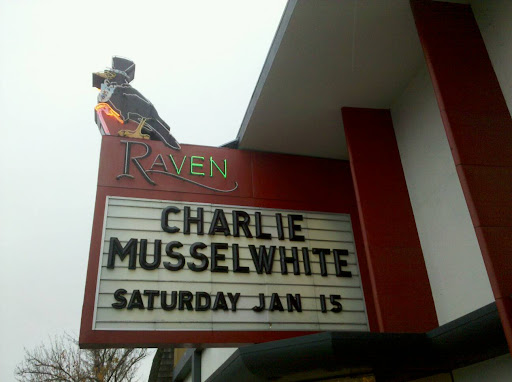
theatre sign in healdsburg, california

In healdsburg, about two hours north of san francisco for wine tasting.
Published with Blogger-droid v1.6.4